The organization is based around the traditional parish and county structures of Ireland. As a community-based organization, it is often stated that it is difficult to determine where the community ends and the GAA club starts, as the two are so often intertwined. The GAA has over 2,200 clubs in all 32 counties of Ireland. All players are amateur and all participants are unpaid. It is considered quite an honored to be selected to play for your county and children start learning the sport at an early age. Today, the stadium seats over 82,000 fans.
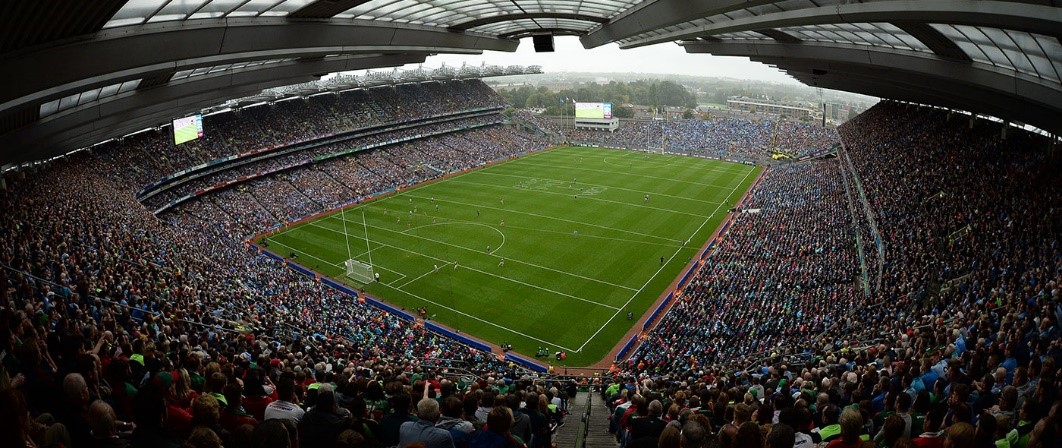
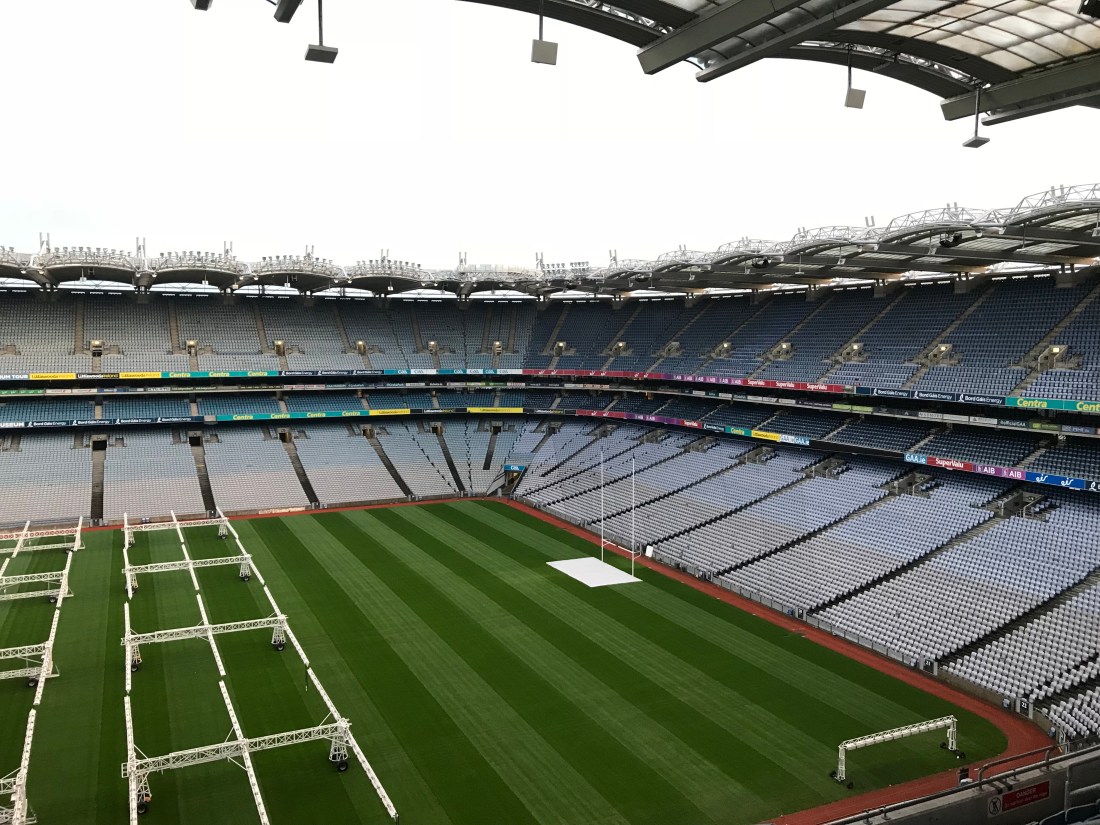 Every summer the inter-county All-Ireland Championships in hurling, football and
(women’s hurling) capture the attention of the Irish public. Regional towns heave with the arrival of large numbers of supporters and all the color, noise and excitement that they bring – culminating with the showcase All-Ireland finals in Croke Park during September.
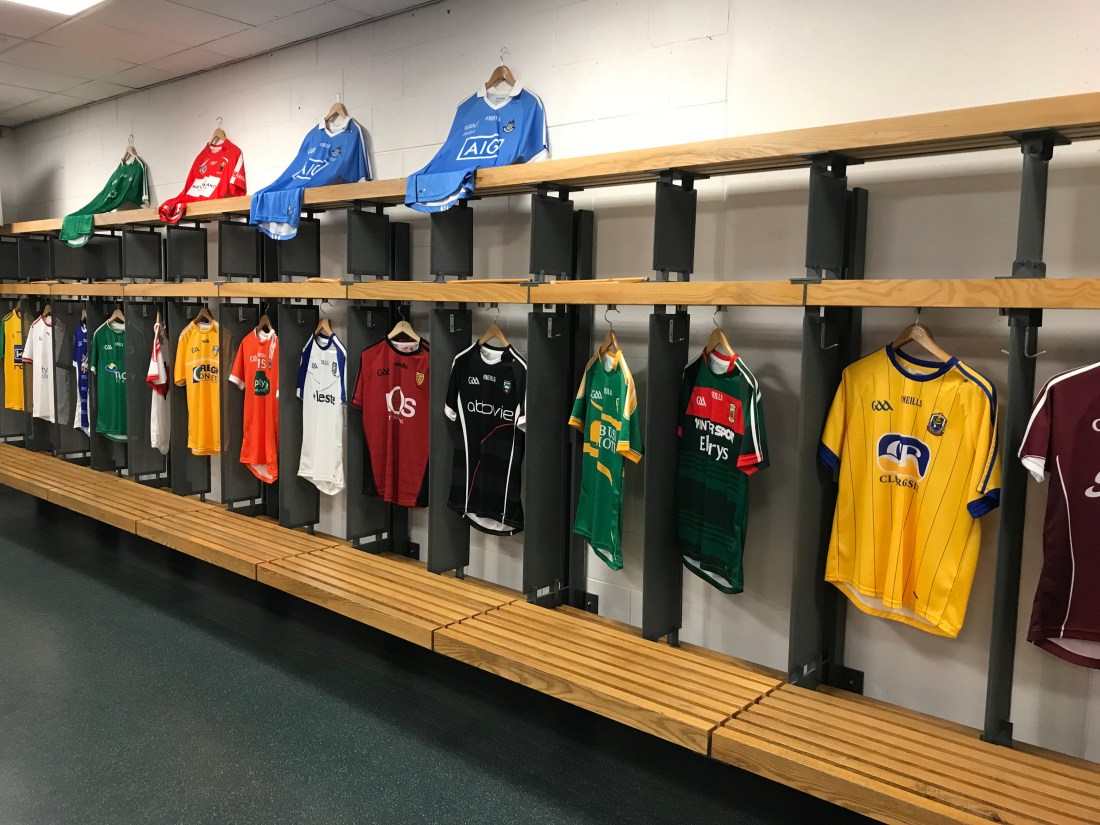
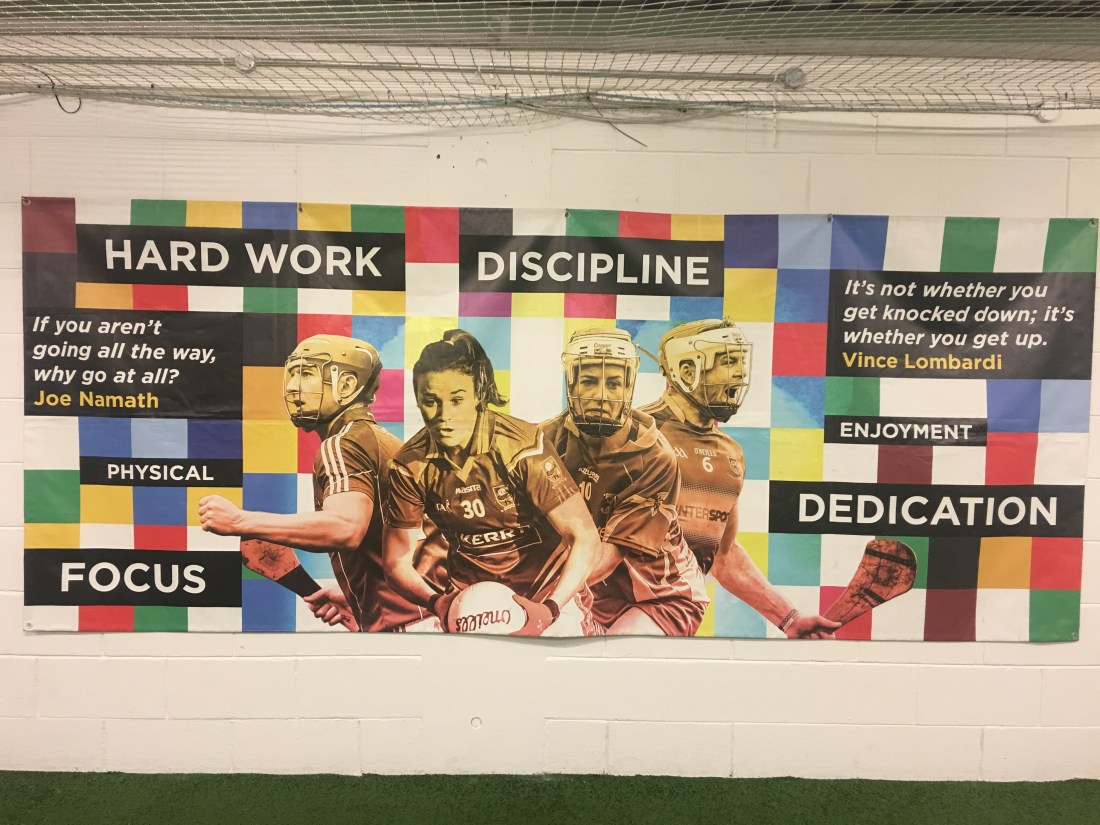
We toured Croke Park with Emily and Austin in December. We took this picture from inside the locker room. The jerseys represent each of the counties.
In 1918 the GAA was declared a dangerous organization by the British Government and Gaelic games were banned. However, on Sunday August 4th over 54,000 GAA members, defying the ban, played GAA games at a designated time of 3pm all over Ireland. At Croke Park players were prevented from entering the grounds so Camogie players treated police officers to the spectacle of a game of Camogie outside Croke Park on Jones’ Road. This day became known as ‘Gaelic Sunday’.
On November 21,1920 thirteen spectators and one footballer died in Croke Park when British Troops entered the grounds and opened fire during a challenge match between Tipperary and Dublin. Over 10,000 people attended the match that ill-fated day which become known as ‘Bloody Sunday’.
Stay tuned – On Saturday, February 23, 2019, we will be in the stands to cheer on County Dublin vs. County Mayo in Gaelic football.

 Adventures in Ireland